
We roast light because we want you to taste the coffee, not the roast. If you've tried coffee from Koppi for the first time and thought "this doesn't taste like coffee usually does" — lighter, sweeter, fruitier, with hardly any bitterness — that's the intention, and this is the idea behind it.
What roasting actually does
Green coffee beans don't taste much. Roasting can, when done right, bring out all the beautiful and intrinsic flavours and the full potential of a specific coffee. However, roasting can also be destructive: the longer and darker you go, the more of the bean's own character burns away and gets replaced by flavours that come from the roast itself — the roasty, smoky, bitter notes that most people think of as "coffee flavour." Those notes taste roughly the same whatever the origin. A dark-roasted Kenyan and a dark-roasted Brazilian are hard to tell apart.
Roast lighter and with a controlled profile, and the opposite happens. The origin comes through: a Kenyan's blackcurrant and citrus, a Costa Rican honey's nougat and apple, a Colombian Pink Bourbon's rose hips and red berries. Those flavours were always in the bean. Roasting the coffee lighter brings out all those beautiful characteristics without adding the negative flavour compounds that you would get from a dark roast.
Why it only works with very good coffee
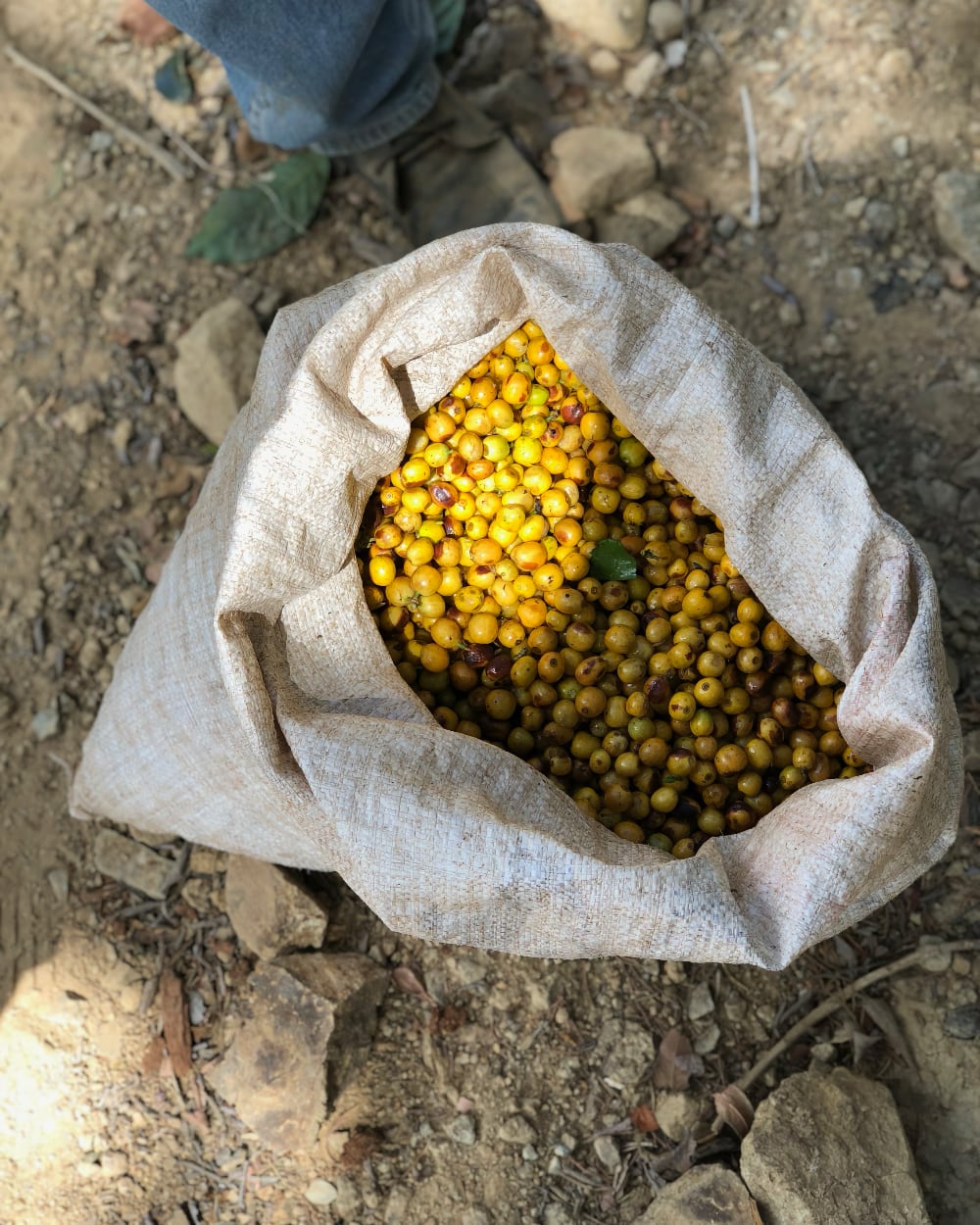
Light roasting hides nothing — which means it exposes defects as readily as it exposes quality. You can't roast mediocre coffee light; it tastes thin and grassy. So roasting light is really a commitment to the whole chain before the roaster: ripe picking, careful sorting and processing, slow drying and buying from farmers who do that work. We've bought from many of the same farms for over a decade — La Fuente, La Lia, Karimikui — because the roast can only reveal what's already there.
What "light" means at Koppi
Not underdeveloped. A badly executed light roast is sour and vegetal; ours aims for fully developed sweetness at a light colour — the roast is long enough to build sugars and body, short enough to keep the acidity bright and the fruit intact. We roast in small batches in our Helsingborg roastery and cup every batch against a reference before it's released — if it doesn't pass quality control, it doesn't ship.
Our espresso is roasted the same way. Espresso doesn't have to be dark and bitter; our espressos are sweet, clean and juicy — an espresso that tastes of the coffee it's made from.
What to expect in the cup — and how to brew it
Acidity — the good kind, like fruit. Sweetness that grows as the cup cools. Very little bitterness. If your first cup surprises you, give it three or four; most people find ordinary coffee tastes flat and bitter afterwards.
Our V60 guide and French press guide have the recipes we use ourselves. And please, at least the first time — try it without milk.
The Swedish tradition we come from
Nordic roasting has always been lighter than most of Europe. Koppi started in 2007 as a coffee bar with its own roaster in the heart of Helsingborg, founded by Anne Lunell and Charles Nystrand, both Swedish barista and brewers champions. Roasting light was never a trend for us; it's simply what lets the coffees we've travelled to find taste like themselves. More about Koppi →